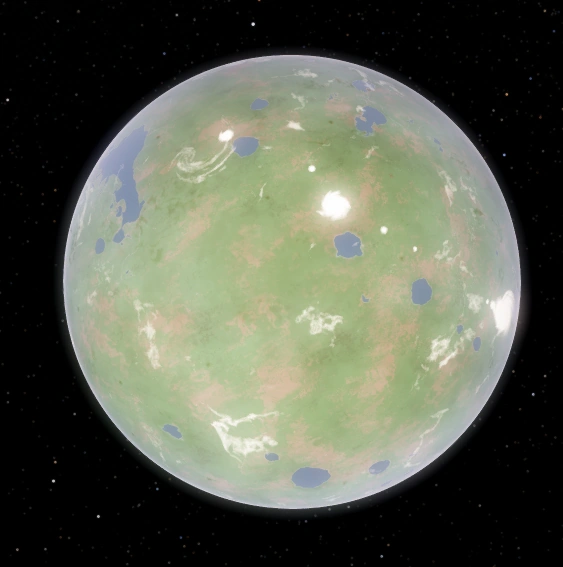
Overview:
Colossus, a moon situated within the frigid reaches of the cosmos, orbits the colorless Neptune-like gas giant Benthesikyme, approximately around 48,330 light years away. This moon, which is a Titan analogue, captivates the imaginations of astronomers and astrobiologists due to its unique features, from liquid nitrogen seas to a very otherworldly atmosphere.
Physical Characteristics:
- Size and Composition: Colossus, smaller than Earth with a diameter of around 46% of our planet, is a frozen world with a surface predominantly composed of hard ice, simulating the characteristics of terrestrial rock. Its diverse landscapes include towering mountains, sprawling deserts, and extensive plains, each adorned with exotic purple-hued plants adapted to the extreme conditions.
- Surface Liquid: Liquid nitrogen, analogous to water on Earth, flows across Colossus in rivers, lakes, and seas. These frigid nitrogen bodies sculpt the moon's terrains, creating a dynamic landscape that serves as the canvas for the development of exotic multicellular life.
Atmosphere and Environment:
- Atmospheric Pressure and Composition: The thick atmosphere of Colossus, with a pressure of around 27.9 ATM, primarily consists of gases like nitrogen (99.6%) with traces of many other gases such as carbon monoxide (0.238%) and carbon dioxide (0.162%). This atmospheric composition, coupled with the extreme cold, makes it inhospitable for human life.
- Yellow Nitrogen Clouds: Three layers of yellow nitrogen clouds envelop Colossus, veiling the moon's surface from the vastness of space. These clouds, a product of the moon's peculiar atmospheric dynamics, contribute to the ethereal beauty of the celestial landscape.
Exotic Multicellular Life:
Colossus is not barren; it hosts a unique form of life adapted to its harsh conditions. Exotic multicellular organisms thrive in the liquid nitrogen seas and on the frozen plains, showcasing nature's ability to adapt and survive in environments once considered inhospitable.
Orbit and Rotation:
Colossus completes both its rotation and orbit around Benthesikyme in a concise 20 days, contributing to a relatively swift celestial dance within its distant cosmic home.
Gallery:
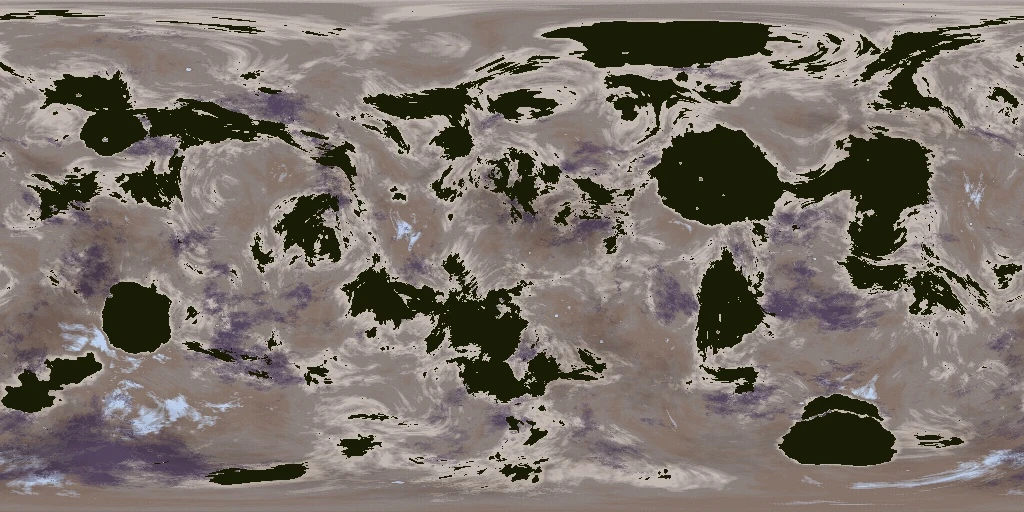

Map Of Colossus. (Without clouds)
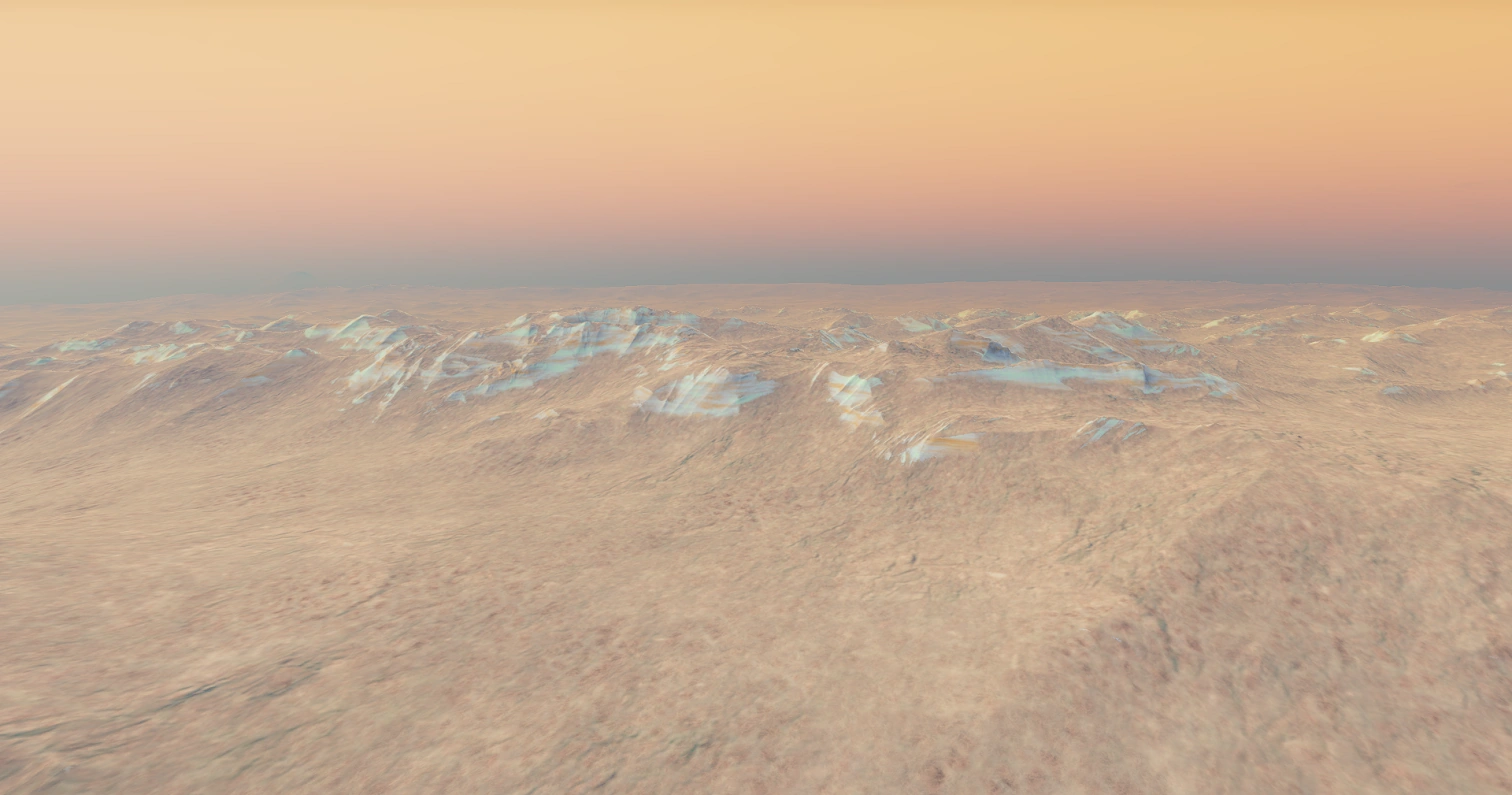

Mountains on Colossus.
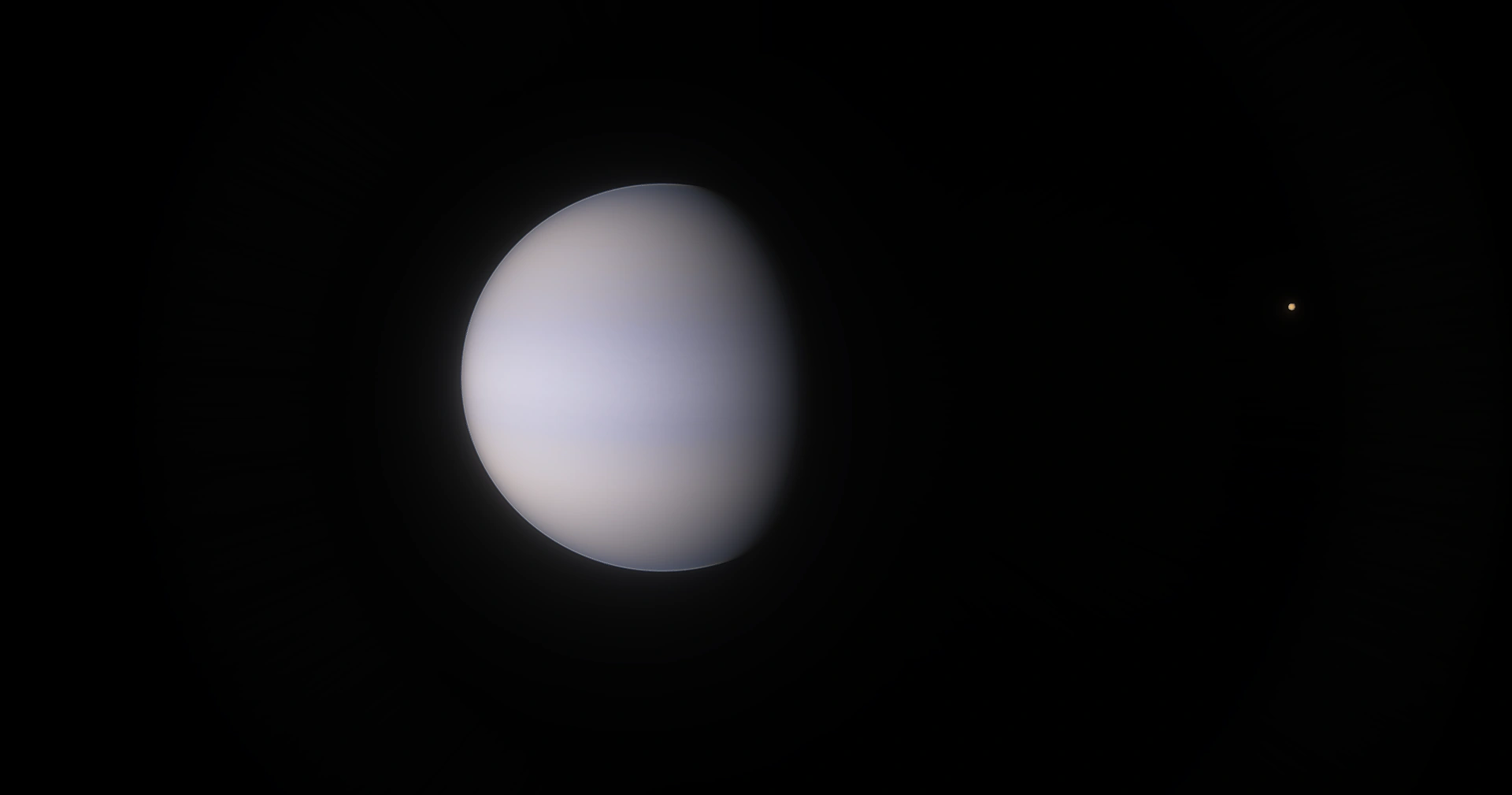

A Picture of Benthesikyme and Colossus in the backround.