Overview:
Tethys is a moon of Saturn and is the third smallest saturnian moon, Tethys has many geological features. This article provides a comprehensive overview of Tethys, exploring its physical characteristics, geological history, and the insights garnered from exploration missions.
Physical Characteristics:
- Size and Composition: Tethys has a diameter of approximately 1,062 kilometers (660 miles), making it one of Saturn's major moons. Composed primarily of water ice, Tethys is known for its bright, reflective surface such like other moons such as Enceladus.
- Surface Features: Tethys has many surface features, including prominent impact craters, chasms, and a massive rift known as the Ithaca Chasma. Its most distinctive feature is a large crater named Odysseus.
Features:
- Ithaca Chasma: The Ithaca Chasma is a large canyon system on Tethys, spans over 1,000 kilometers (620 miles) and reaches depths of up to 100 kilometers (62 miles). Scientists believe it to be a result of ancient tectonic activity.
- Odysseus Crater: Named after the legendary Greek hero, the Odysseus Crater is an impact feature that spans a significant portion of Tethys' surface.
Exploration:
Tethys has been a subject of exploration primarily through the Cassini-Huygens mission:
- Cassini-Huygens: The Cassini-Huygens spacecraft conducted extensive observations and flybys of Tethys during its mission to Saturn. These encounters provided data on the moon's composition, surface characteristics, and geological history.
Gallery:
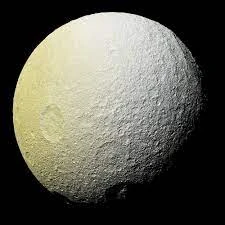

A real image of Tethys taken by the Cassini Spacecraft.