Overview
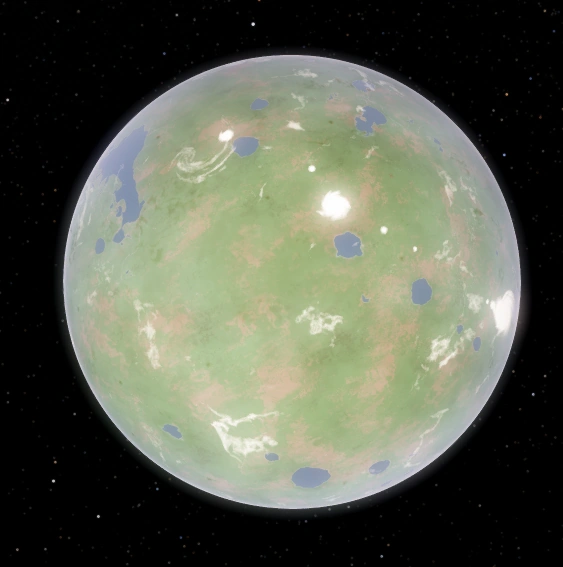
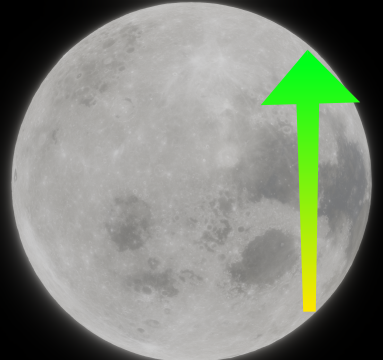
Ceres is the Solar system's smallest dwarf planet and the largest object in the main asteroid belt. It was also the first object in the asteroid belt to be discovered, and was initially categorized as a planet until the discovery of many other similar objects led to their re-categorization as dwarf planets. Ceres is slightly less than 1,000 km in diameter and is composed of rock and ice. It comprises one-third of the mass of the asteroid belt. It may also have a tenuous atmosphere. No natural satellites have been discovered around Ceres.[1]
Surface Environment
Ceres has a surface composition largely similar to carbonaceous (C-type) asteroids, with some notable differences. The characteristic most dissimilar from C-type asteroid composition is the existence of hydrated materials. The surface may also contain carbonates and iron-rich clays, materials that are also uncommon on C-type asteroids. Temperatures on the surface can reach 235 K, relatively warm for a body so distant from the sun, thanks to Ceres' low albedo.
Very few features have been identified on the surface of Ceres. Even the most powerful near-Earth telescopes can not resolve details much smaller than 30 km across. Several bright and dark features have been mapped, though nothing is known about any of them. Ceres also does not appear to be geologically active, and its surface is likely altered only by impact events.
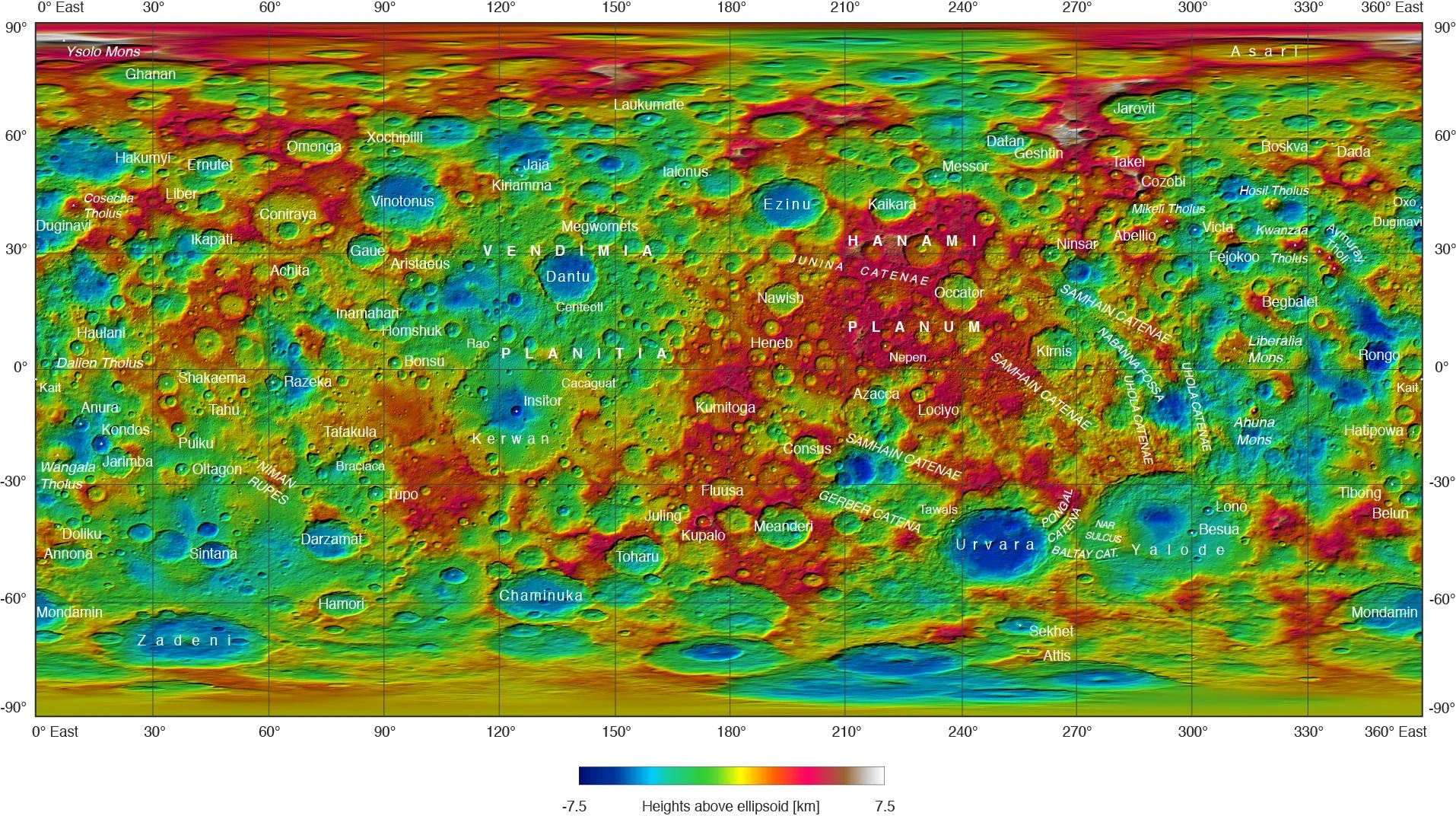

Map of Ceres' surface
Internal Structure
Due to its large size, oblate spheroidal shape, and some observed surface characteristics, many astronomers suspect that Ceres has a differentiated interior with a rocky core and a mantle composed largely of water ice. If true, this would make Ceres the largest surviving protoplanet in the inner Solar system. However, this has yet to be confirmed by close observation, and alternative possible explanations for its shape and surface characteristics do exist. If a water ice mantle does exist, then it is possible that a liquid ocean layer exists or did exist as well.
Atmosphere
There are indications that Ceres may have a thin atmosphere, and possibly exposed water ice or frost on its surface. Any such ice would sublimate if directly exposed to sunlight, escaping away into space. Hydroxide ions detected near the north pole of Ceres may be caused by this process.
- ↑ This article was adapted from the Space Engine ingame wiki
Images


